
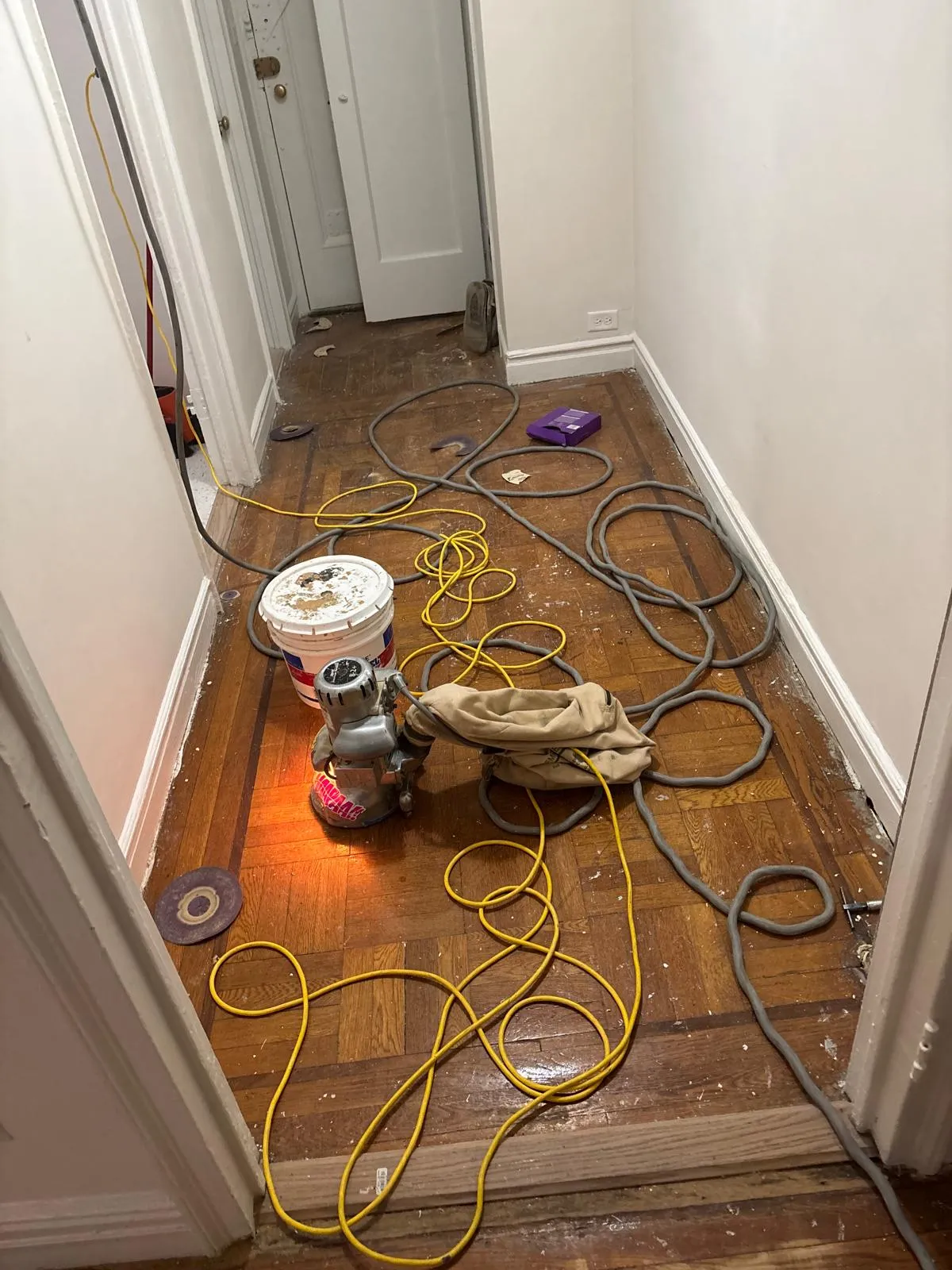
A floor only gets so many trips under the sander
Every sanding takes wood off the top of a floor, and that wood never comes back. Most owners do not think about it, because the floor looks thick from above and the last refinish happened before they bought the house. In a Cape Cod or colonial from the 1940s or 50s, the oak may already have been sanded two or three times by people you never met.
Whether it can take one more is a question with a real answer, and we check it before the machine comes off the truck.
Where the usable wood actually sits
A solid oak strip floor from that era is three quarters of an inch thick, but very little of that thickness is available to sand. Each board is milled with a tongue on one edge and a groove on the other, and the boards lock together at that joint. Everything from the top of the tongue down is structure. Only the thin layer of oak above it is wear surface, and that layer is what every sanding spends.
The fastening matters too. Strip flooring of that age was blind nailed through the tongue at an angle, so the nail heads hide inside the joint. Sand far enough and the joint starts to give itself away: first as a dark line running along the board edges, then as the tongue itself, and on a floor pushed past its limit, as nail heads lined up every few inches down each board.
Once a tongue shows through, that board has nothing left to offer. It can be replaced. It cannot be sanded again.
Reading the floor before anyone commits
Thiago starts with the spots where a floor gives away its history. Lift a floor register out of its opening and you see the board in cross section, so the oak left above the tongue can be judged directly. A threshold where the strip meets tile or carpet often tells the same story. He looks down the board edges in low, raking light for the dark seam that means an earlier sanding went deep, and he checks the traffic lanes, which sometimes got sanded harder than the rest of the room.
Gray, worn floors look alarming and are usually the easy case. Gray means the finish wore through and the bare oak oxidized in the light, which is a surface problem. The gray comes off in the first passes, and fresh oak is sitting right underneath. A floor that looks fine but shows those edge seams is the one that needs the careful conversation.
If the read says there is one good sanding left, you hear that at the first visit, along with what it means for how the floor should be treated afterward.
What the carpet years leave behind
Plenty of this oak spent decades under carpet, and the carpet itself was gentle on it. The installation was not. Tack strip was nailed through the oak around every wall, pad was often stapled down every few inches, and some pads left a sticky film as they broke down.
All of that has to be dealt with before sanding, and how it comes out decides how much wood goes with it. Staples pulled one at a time leave a pinhole. Staples torn out with the pad leave splinters and lifted fibers that the sander has to cut below to clean up. Tack strip pried off carelessly can split the outside boards along a wall, which happens to be where the edger already works hardest.
So if you know the oak is down there, call before the carpet comes up. A few minutes of advice on pulling it can save a real share of the wear layer you are trying to protect.
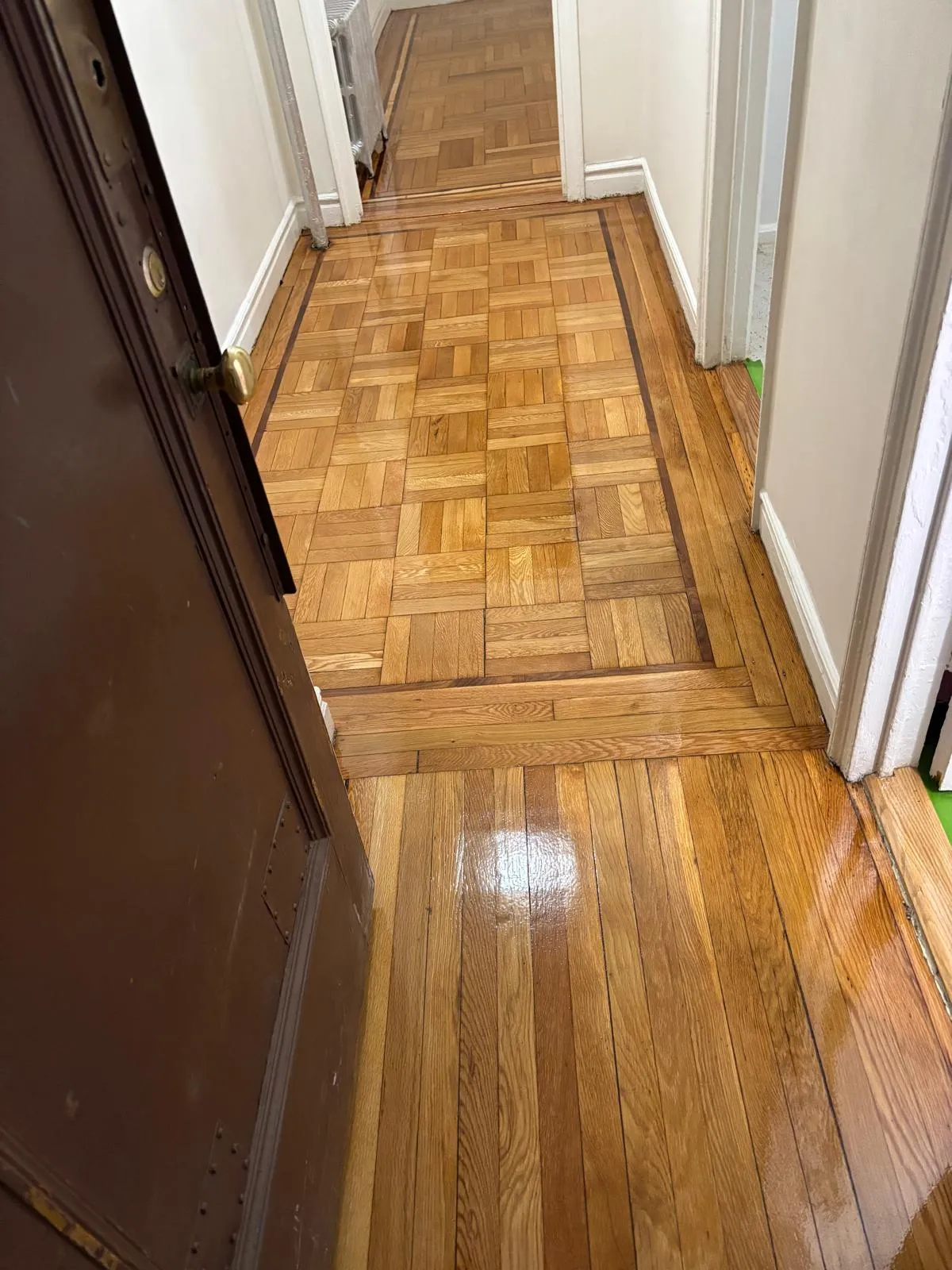
Taking off only what the floor needs
On an older floor the goal is to remove the old finish and the damage, then stop. That starts with choosing the first grit. Coarse paper cuts fast and is sometimes necessary on a floor with thick old coatings or real cupping, but starting coarser than the floor calls for burns wood for nothing.
From there the sequence steps through finer grits, each one erasing the scratches the last one left. Skipping a step is the most common shortcut in this trade, and on bare wood it hardly shows. It shows the moment stain goes down, as swirls and lines that soak up more color than the field around them.
The big machine cannot reach the last few inches at a wall, inside a closet or around a door casing. An edger handles the perimeter, and the corners and jambs get scraped by hand. Our Prairie Village hardwood sanding page lays out how that work runs room by room in these houses.
Sometimes the right move is no sanding at all
A floor whose finish is dull and lightly scratched, but still intact across the whole surface, does not need to go back to bare wood. A screen and recoat is the lighter option. The existing finish is abraded with a fine screen so a fresh coat can bond to it, and nothing comes off the oak itself.
That only works while the finish is still there. Once the traffic lanes have worn through to gray wood, a new coat over them would seal the discoloration in, and the floor needs a real sand. Recoats also refuse to bond over some surfaces, so floors that were waxed or cleaned with polish products have to be tested first.
For a floor close to its last sanding, a recoat every few years is the way to stretch what remains. It buys time without spending wood, and the full sand can wait until the floor truly needs it. Thiago will tell you which side of that line your floor sits on during the first visit.
Questions about sanding an older floor
How can I tell how many times my floor has been sanded?
You usually cannot count it directly, but you can see what is left. Lift a floor register and look at the board edge, or check a threshold. If the oak above the tongue looks thin, or dark seams run along the board edges, earlier sandings went deep and the next one needs a light hand.
Will sanding close the gaps between my boards?
No. Sanding flattens the surface and does nothing to the gaps. Small seasonal gaps in old strip oak come and go with the weather, and the stable ones get filled during the refinish. Wider gaps that keep moving need board work instead, and you will know which kind you have before the sander starts.
Does the room need to be empty for the read?
No. Thiago can judge the wood at a floor register, a threshold or a closet edge with the furniture where it is, and lifting a corner of carpet takes a minute. The room only has to be cleared for the sanding itself.
Have the floor read before you book a sand
If a sand is on your list, start with the read. It takes a few minutes, it tells you how much oak is left, and it keeps a good floor from being spent on the wrong job. If color is part of the plan, our staining work in Prairie Village is worth a look too.
Find out what your oak has left
Thiago drives over from the Shawnee shop, about twenty minutes away, checks the floor at a register or threshold, and writes down a straight price with the reasoning behind it. More about the work we do in town is on our Prairie Village page.