

Picking a stain color on the floor that will wear it
A color chip in a store tells you very little about the oak in your living room. Our hardwood floor staining starts after the sanding is done: we brush test squares straight onto your bare floor, near your own windows, and you live with them for a bit before choosing. One floor got six, from Dark Walnut to Weathered Oak. Yours gets as many as it takes.
Test squares go down on bare wood, in your light
Sanded first
A stain only tells the truth on wood sanded to its final grit. Squares on an unsanded floor, or on a scrap board from a showroom, read lighter or blotchier than the real thing, so we wait until your floor is ready.
Placed by the window
We brush the candidates where daylight hits the floor and again in a dimmer corner. Each square gets a handwritten label beside it, so nobody is guessing which was Provincial and which was Special Walnut a day later.
Popped or plain
On some floors we wet a strip first to raise the grain, then lay the same color on wet and dry wood side by side. The gap between those two can be bigger than the gap between two different cans.
Looked at twice
Morning sun and evening lamps move a color further than people expect. We ask you to look at the squares more than once, ideally at the hours you actually use the room.
One floor, one coat
Once you choose, the test squares get sanded back out and the whole floor is stained in one session, repairs included, so the color goes down as a single surface instead of a quilt.
Red oak, white oak, and the same can of stain
Most of the older floors here are oak, but they are not all the same oak. Red oak has open, porous grain and a warm, faintly pink base, so a brown stain often comes out warmer on it than the label suggests. White oak is tighter and cooler, and that same brown can lean toward gray or olive. Some houses have both, especially where an old repair or an addition used whatever wood was on hand at the time.
Water-popping is the other lever we have. We mist the sanded floor so the grain swells and opens as it dries, and stain then soaks in deeper and more evenly. Colors come out darker and richer, and the blotchy patches red oak sometimes throws calm down. It adds drying time before staining can start, so we decide on it during testing and plan it into the schedule instead of springing it on you midweek.
The finish on top moves the color too. A satin coat over stain looks softer and a shade lighter, while gloss deepens the tone and throws back more light from the windows. When you are judging the squares, we can wipe a little clear finish over one corner of each, so you see the color as it will actually sit on a finished floor, sheen and all.
Close to home
A lot of the stain work we do here starts under carpet, on oak from the 1940s and 50s that nobody has seen in years. Our crew covers Prairie Village and the rest of Johnson County from the Shawnee shop, about twenty minutes away.
There is more about the town on our Prairie Village page, and the general process is laid out on the hardwood floor staining page.
Related work: Sanding · Replacement · Custom · Installation
Smaller windows change what a color looks like
A Cape Cod room with modest windows reads every stain darker than a bright, open space does. Dark Walnut that looks rich in an open kitchen can turn nearly black in a bedroom tucked under the roofline, and a mid-brown that seems plain in a sunny room can be exactly right in a dim one. That is why the squares go beside your actual windows, and why we ask which rooms connect, so the color still makes sense walking from one into the next.
Dark floors also show more. Dust, light pet hair and fine scratches sit on top of a deep brown and catch the eye, where a medium tone hides them for days. If a pale dog lives in the house, or a back door gets heavy use, we will say which colors you will be sweeping around. Then it is your floor and your decision, and we stain it the way you chose.
Asked before you choose
- How much daylight does the room get, and from which side?
- Does a pet live here, and what color is its coat?
- Which rooms open into each other, so one color carries through?
- Is the trim staying, and what color is it?
- Red oak, white oak, or a mix from past repairs?
- Do you want the grain to stand out, or a calmer surface?
Look at color on finished jobs in our gallery, then tell us about your rooms.
Patched boards, and the case for leaving it natural
Older floors here often carry scars from a plumbing leak or a wall that moved, and those spots get new boards laced in. Fresh oak is lighter and thirstier than wood that has aged for decades, so it can drink stain differently. We sand the patch and the field together, brush a test square that straddles the seam, and adjust the color or the prep before the whole room goes down. The goal is a repair you cannot point to from the doorway.
Natural is a legitimate choice on its own. A clear finish over sanded oak lets the wood warm up gradually over the years, shows the grain without anything sitting in it, and forgives dust better than a dark floor does. Plenty of people study six squares and end up picking the bare wood that was under them the whole time. We are happy either way.
Who brushes the squares
Hardwood Kings is family-run, owned by Thiago Reis since 2012, with a shop in Shawnee. Thiago comes out to see the floor himself, and the crew that lays your test squares is the same crew that stains the whole floor. Materials come through ProSource Wholesale at contractor pricing, and our Google rating is 5.0.
Color questions we hear on the phone
Stain choices make people nervous, and they should ask. These are the ones that come up most often around Prairie Village.
Ask Thiago directly
A photo of the room by email helps him talk color with you before he ever visits.
(913) 915-3193hardwoodkingsinc@gmail.comWhy test on my floor instead of picking from a sample board?
Because a sample board is not your oak. Species, age, how the floor was sanded and the light in your room all change how a stain reads. Squares brushed onto your own sanded floor, near your own windows, are the only reliable preview of what the finished room will look like.
Does red oak take stain differently than white oak?
Yes. Red oak has open grain and a warm, slightly pink base, so browns tend to come out warmer. White oak is tighter and cooler, and the same stain can lean gray or olive. If your floor has both from old repairs, we test across them before you choose.
What is water-popping, and do I need it?
It means misting the sanded floor so the grain opens before staining. The stain then soaks in deeper and more evenly, which helps darker colors and calms blotchy red oak. It adds drying time, so we decide on it during testing rather than on the morning of the job.
Will a dark stain be hard to live with?
It can be. Dark floors show dust, light pet hair and fine scratches more than medium tones do. In a busy house with pets, many people settle on a middle brown instead. In a dim Cape Cod room, dark also reads darker still. We will tell you straight before you commit.
Can new patch boards match the old floor color?
Yes, when the patch and the field are sanded and stained together. New oak can absorb stain differently than aged wood, so we test a square across the seam first and adjust the color or the prep until the repair blends into the rest of the room.
How do I get a price for staining my floors?
Tell us the rooms and the color you lean toward, by phone at (913) 915-3193 or through the contact form. Thiago comes to see the floor, checks the species and condition, and writes up a straight price covering sanding, testing, staining and finish.
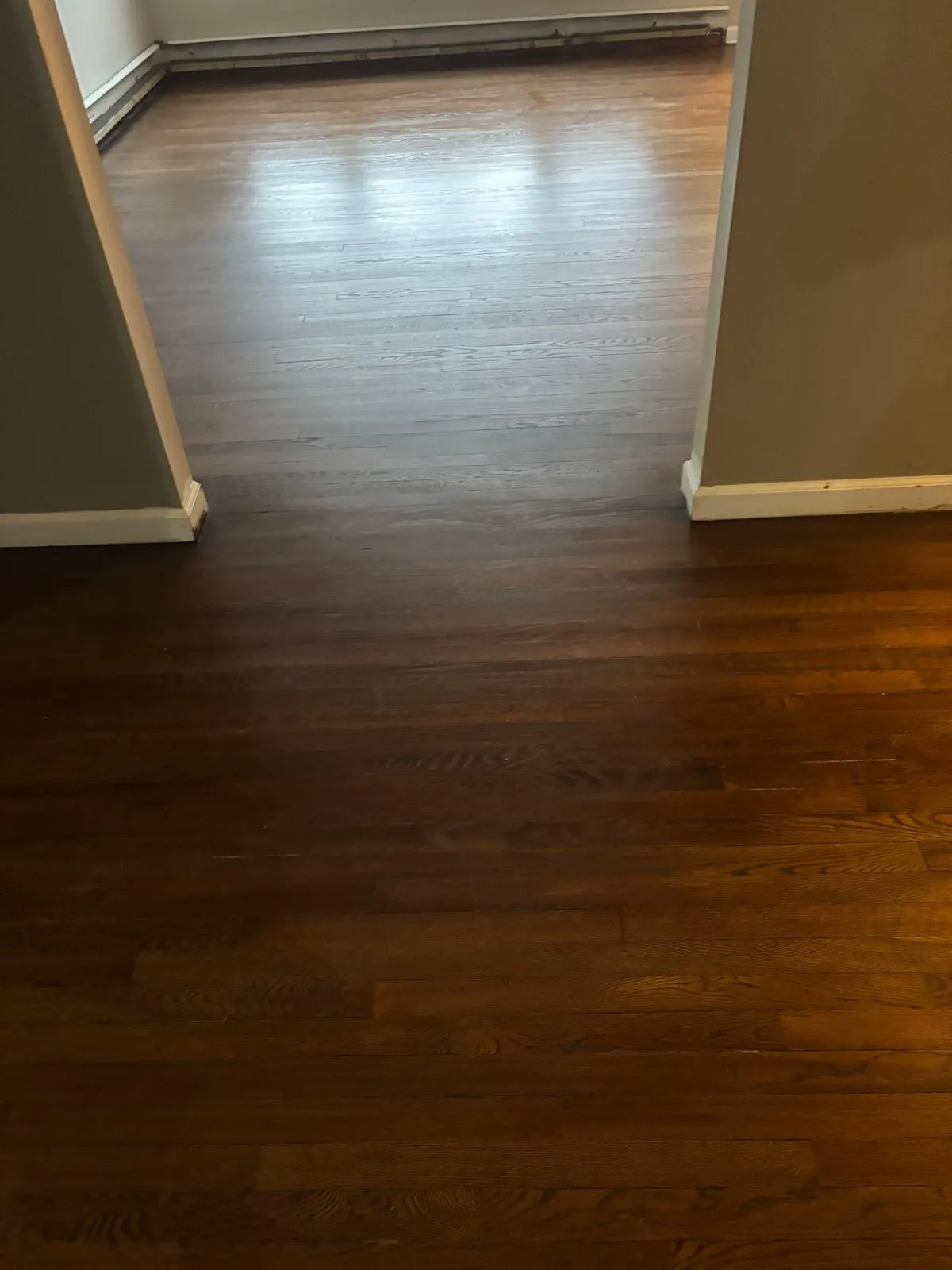
See the color before it covers the room
Tell us which rooms and roughly what shade you are drawn to. Thiago comes over from Shawnee to look at the oak, talks through what will show in your light, and gives you a straight price in writing before a single square is brushed.
Or browse finished color in the gallery. Licensed, certified, and family-run since 2012.