

New solid oak that joins the floor you have
The houses here were built on three-quarter-inch solid oak nailed to a wood subfloor, and that is still the best way to add hardwood to them. When a bedroom comes out of carpet or an addition goes on the back, we lay new strip that carries on from the original, read the moisture before fastening anything, and finish old and new as one floor. Thiago comes to see the house first.
Solid strip on a wood deck, the way these houses began
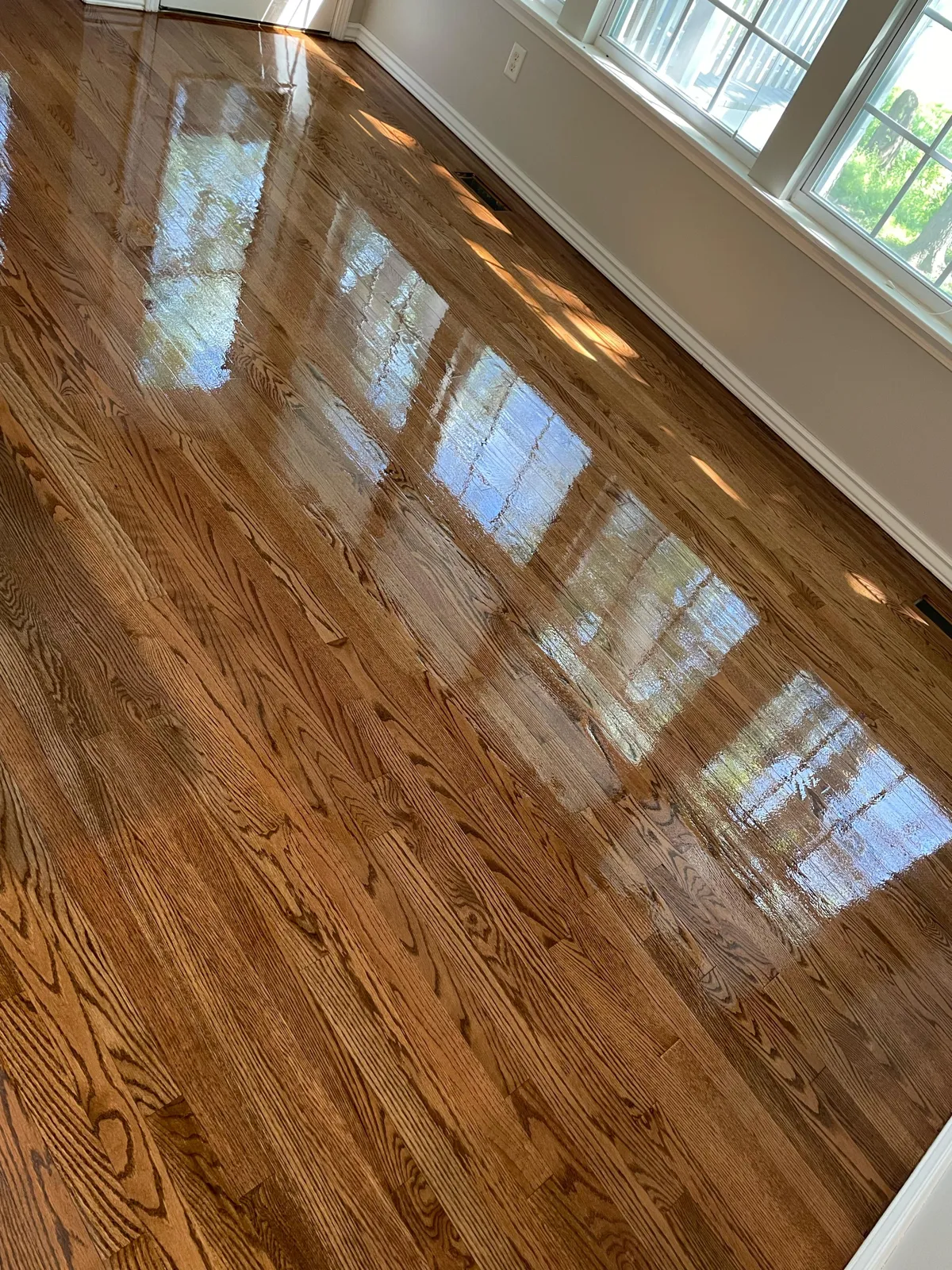
The Cape Cods and colonials put up in the 1940s and 50s came with solid oak as standard, laid in narrow strips and nailed through the tongue into a wooden subfloor. Seventy-some years later, most of that oak is still there, a good share of it hidden under carpet. When we install new hardwood in one of these houses, we follow the same build: solid three-quarter-inch boards, blind nailed, running the same direction and the same width as the original wherever the two meet. Matching the construction is what lets a new section disappear into the old one.
Solid wood also matters for the life of the floor. A three-quarter-inch board carries enough wood above the tongue to be sanded again and again over the years, exactly like the original oak beside it. Put a thinner product next to old solid strip and the two age at different rates, and every future refinish has to work around the weaker one. Keeping the whole floor solid means every room can be refinished on the same schedule.
On every solid oak job
- Moisture readings on the new boards and on the subfloor
- Loose or squeaking subfloor refastened while it is open
- Board width and species matched to the existing oak
- New rows laced into the old floor at staggered lengths
- Direction set against the joists and the rooms beside it
- Old and new sanded and finished in one sequence
More on grades, widths and species sits on the solid hardwood installation page. On a concrete slab the answer changes, and that is the job engineered hardwood installation is built for.
Moisture readings before a single nail goes in
Wood in the rooms
New boards arrive at the house and sit in the rooms they will be installed in, spread out so air reaches every piece. A board that left a dry warehouse and gets nailed straight into a humid summer house keeps moving after it is down, and that movement shows up later as gaps or cupped edges.
Two numbers that agree
We read the new boards and the subfloor with a moisture meter and keep reading until the two settle close to each other. Fastening starts when that gap closes. You hear the likely wait at the first visit, so it sits in the schedule from the beginning and never arrives as a surprise.
Gaps that match
Oak strip opens a little in winter and tightens up in summer. The original floor in these houses has done that every year since it was laid, and the new section will do it too. Installing at the right moisture keeps the new boards moving in step with the old ones, so the seasonal gaps look the same everywhere.
The subfloor comes first
Before the first row goes down, we check the deck for loose and squeaking spots, which are common in mid-century framing. Those get refastened while the floor is open, because once new oak covers them, a squeak is sealed in for the life of the floor.
Which way the boards run, and where new meets old
Strip flooring is strongest laid across the floor joists, and the original oak in these houses almost always follows that rule. When we extend into a carpeted bedroom or a new addition, we confirm the joist direction first, then look at how the existing floor travels through the doorway. New boards have to stay in line with the old ones for the two to read as one floor, so both of those directions need to agree. When they do not, we talk through the choices with you before a box gets opened.
Where the new section meets the old, we lace it in. That means pulling alternating boards along the edge of the original floor so the new rows weave into it at staggered lengths, the way the house was first laid. A straight seam or a metal transition strip is quicker, and it always looks like a patch. Lacing takes more time and disappears once everything is sanded and finished together. When we say an addition gets matched to the original oak, this is the work that phrase stands for.
A price that stays put
Thiago measures, checks the subfloor and the direction of the old oak, and lays out the options. You get a straight price in writing with each step listed, so you can see where the time goes. It does not creep upward once the crew is on site.
Site-finished oak or prefinished, in an older house
Unfinished solid oak, sanded and finished on site, is our usual recommendation when new wood joins an original floor. Everything gets sanded flat in one pass, old and new take the same stain or the same natural finish, and the room ends up with a single sheen from wall to wall. Prefinished boards arrive with a factory coat and a small bevel on each edge, which looks fine in a room of its own and wrong beside square-edged oak from the forties.
Prefinished can still make sense in a separate space, such as a bedroom with its own door that never touches the original floor, where getting the room back quickly matters more than matching. We will tell you which case your rooms fall into. Houses built on a concrete slab, common across the newer parts of the county south of 135th, are better served by engineered wood. The houses we work in here sit on wood framing, and solid oak belongs on it.
Close to Prairie Village
Our shop is in Shawnee, about twenty minutes away, so the first visit and any follow-up are quick to arrange. The Prairie Village page covers the original oak in this city, including the board repair and gap filling we do for homes across town, and the Johnson County page shows how one crew covers the rest of the county.
Photos of finished oak from around the metro are in the gallery. When you know which rooms are next, send them over here and we will set a time to come out.
Also in Prairie Village: Sanding · Staining · Replacement · Custom floors
Before you book new solid oak
The questions that come up most when someone is adding hardwood to an older house. Yours not here? Call the shop.
Ask the installer
Thiago is happy to talk through the technical side before anyone books anything.
(913) 915-3193hardwoodkingsinc@gmail.comCan new oak match the original floor in our bedrooms?
In most houses here, yes. We match the species and the strip width, lace the new boards into the old at the doorway, and sand and finish everything together. Once the room is done, it reads as one floor running straight through, with no transition strip marking where the old oak stops.
Why solid hardwood instead of engineered on our floor?
These houses sit on wooden subfloors that hold nails well, which is exactly what solid strip was made for. Solid also matches the thickness of the original oak and can be sanded many times over its life. Engineered earns its place on concrete slabs, and we recommend it there.
How long does the wood sit before installation?
Until the moisture readings say it is ready. We read the new boards and the subfloor until the numbers settle close together, and the wait depends on the season and how dry the delivered wood is. You hear the likely timeline at the first visit, so it is planned in.
Will the new boards run the same way as the old ones?
Where the two floors meet, they should, and we plan for it. We check which way the joists run and how the original oak travels through the doorways. If those two disagree in an addition, we lay out the choices on the first visit, before any material is ordered.
Should we choose prefinished or have it finished on site?
When new wood meets an original floor, finishing on site almost always wins, because old and new get sanded flat and coated together. Prefinished boards have beveled edges that look out of place beside square-edged oak. In a closed-off room that touches nothing original, prefinished can work fine.
How do we get a price on new solid oak?
Call (913) 915-3193 or use the contact form to tell us which rooms and what covers them now. Thiago comes out, checks the subfloor and the existing oak, and hands you a straight price in writing. If an addition is still being framed, call before the subfloor goes down.
Adding rooms to the oak already there?
Tell us which bedrooms are coming out of carpet or where the addition sits. Thiago walks the house, reads the subfloor and the direction of the old floor, and leaves you with a straight price in writing plus the reasoning behind every line of it.
Or look through finished floors before you call. Hardwood Kings has been family-run in Shawnee since 2012, is licensed and certified, and holds a 5.0 rating on Google.